
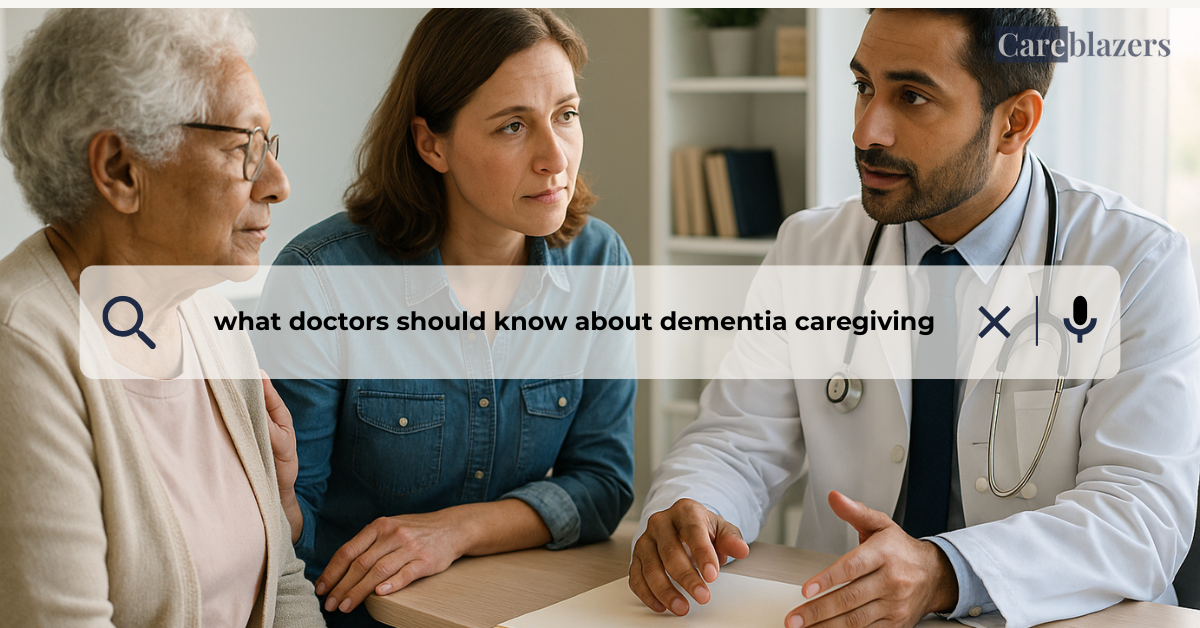
If you’ve ever walked out of a doctor’s appointment feeling unseen, unheard, or frustrated, you are not alone. Family dementia caregivers often carry insights and daily experiences that healthcare providers never witness. Yet too often, those insights are brushed aside in favor of test results or clinical notes.
After working more than 13 years as a hospital-based clinical psychologist, and later becoming a caregiver myself, I’ve seen both sides. I’ve been the professional holding the chart, and I’ve been the daughter sitting beside a confused parent in an exam room. From both perspectives, there are three things I wish every healthcare provider truly understood about dementia caregiving.
1. Credentials Don’t Make You the Only Expert
It’s easy for healthcare professionals to assume that their degrees, training, and years of experience make them the ultimate authority. But here’s the truth: you are the expert on your loved one.
You know their routines, their moods, what calms them down, and what makes things worse. You’ve witnessed behaviors that no doctor, nurse, or therapist has ever seen inside an office. That knowledge is critical. The best healthcare decisions happen when medical expertise and family expertise work together.
Unfortunately, many caregivers tell me they’ve been dismissed or ignored in appointments. A doctor may cut them off mid-sentence or seem impatient when they describe new behaviors. Sometimes the provider assumes they already know what’s best because they’ve seen “cases like this” before. But dementia doesn’t follow a perfect script, and every person’s journey looks different.
If you ever find yourself in that situation, remember: collaboration is not confrontation. You can respectfully speak up by saying things like:
“I understand what you’re saying. Can I share what we’ve been noticing at home?”
“That sounds helpful. Would it make sense to adjust based on how she reacts in the evenings?”
“Can we include this observation in her chart? It’s been happening often.”
Your voice matters. You are not challenging the provider, you’re contributing valuable data that only you can provide.
2. Family Caregivers Are More Than Just Caregivers
When I worked in hospitals, I often saw family members sitting quietly in the corner of exam rooms, tired, overwhelmed, and waiting to be asked for input.
Many healthcare providers still make the same mistake: they see a caregiver as a support person, not as a human being with their own life, responsibilities, and emotions. But you are not just a caregiver. You may also be an employee, a spouse, a parent, a friend, a volunteer, or someone managing your own health issues.
So when a provider gives you a long list of follow-up appointments, prescriptions, or therapy visits, it’s okay to pause and say, “That’s a lot to fit in. Can we talk about what’s most important right now?”
That’s not being difficult, it’s being realistic. Research shows that caregivers who neglect their own health are at higher risk of serious illness and even premature death compared to non-caregivers. Self-care is not selfish; it’s survival.
If healthcare professionals could see beyond the label of “caregiver,” they might better understand why so many of you feel stretched thin. Even a small acknowledgment, “I can see you’re doing a lot; you’re making a difference”, can make a world of difference. Until that happens more consistently, please remind yourself: you deserve care, too.
3. Speak Plainly: Medical Jargon Confuses Families
This one hits close to home. When my dad was hospitalized, a provider came in to explain his discharge plan. She spoke quickly, listing one unfamiliar term after another, “SNF,” “rehab,” “ALF.” My dad nodded politely, but as soon as she left, he turned to me and said, “What in the world was that lady talking about?”
Most caregivers and people living with dementia do not come from the healthcare world. Acronyms like SNF (Skilled Nursing Facility) or ALF (Assisted Living Facility) are confusing. Even words like “rehab” can sound alarming if your loved one associates the term with addiction treatment instead of physical recovery.
When providers use clinical shorthand without explanation, it creates unnecessary fear and confusion. Caregivers may leave appointments feeling embarrassed to ask questions or unsure about what happens next.
If you ever find yourself in that situation, try saying:
“Could you please explain that another way?”
“Can you give an example of what that means for our next steps?”
“Can you write that term down so I can look it up later?”
Good healthcare communication is a partnership, not a lecture. The best providers slow down, use plain language, and make sure you walk away with clarity. If your doctor doesn’t do that automatically, you have every right to ask.
The Bigger Picture: How Caregivers and Providers Can Work Together
When healthcare professionals see family caregivers as essential members of the team, and caregivers feel empowered to speak up, everyone benefits. Misunderstandings decrease. Stress levels go down. And the person living with dementia receives better, more coordinated care.
Here are a few practical steps to strengthen that partnership:
Bring a brief written list of your top three concerns to every appointment.
Ask if you can record explanations (with permission) so you can review them later.
Keep a simple notebook or phone note with medication changes and behavior patterns.
If something feels “off,” document it and bring it up during follow-ups.
The goal isn’t perfection; it’s progress. Each clear conversation builds trust and helps your loved one receive the care they deserve.
A Final Word for Careblazers
If healthcare sometimes feels like an uphill battle, please remember: you are not doing anything wrong. You are navigating one of the most complex and emotionally demanding roles anyone can take on. The fact that you’re reading articles like this, learning, and advocating for your loved one means you’re already doing something extraordinary.
The next time a provider seems rushed or dismissive, remind yourself that your knowledge of your loved one is irreplaceable. Speak up with confidence, ask questions, and expect respect. You belong at the table as a vital member of your loved one’s care team.
And if you haven’t already, I encourage you to subscribe to The Dementia Dose, my free weekly newsletter. It’s where I share strategies, mindset tools, and caregiver-specific insights to help you feel more supported and less alone. You can join by clicking here.
Watch On YouTube
Want to watch the in-depth video that inspired this post?
Click the video below to watch. ↓