
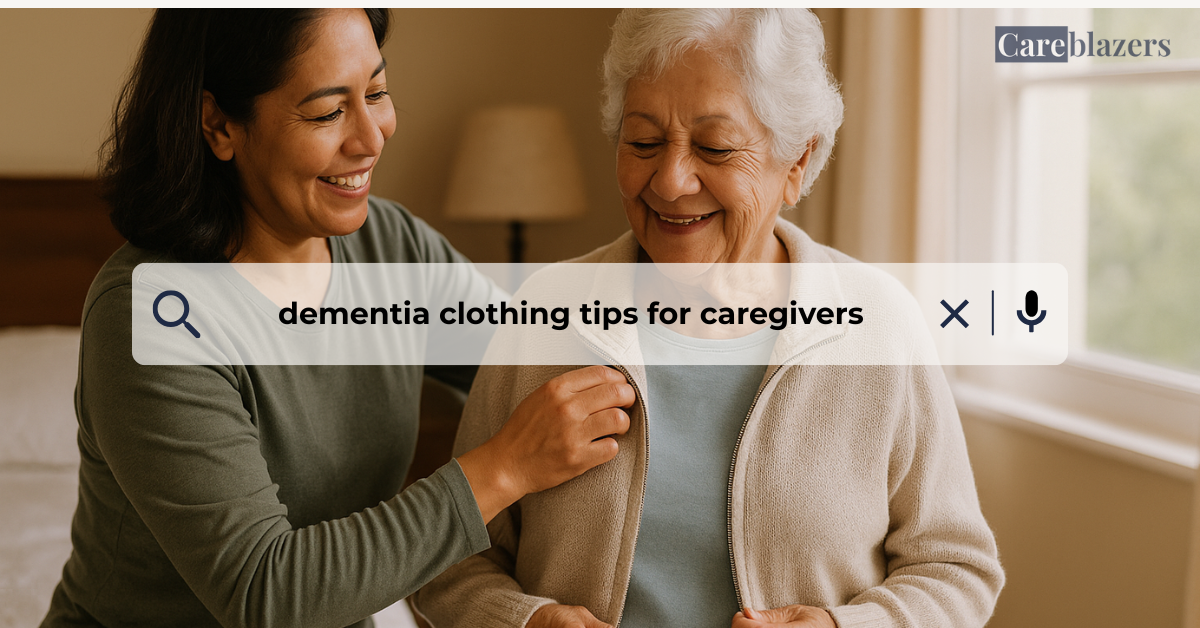
If your loved one is currently living in a memory care community, or may one day move into one, there’s an often-overlooked detail that can make a huge difference in their daily comfort and quality of life: clothing.
While paperwork, medications, and emotional transitions tend to take center stage, clothing choices can quietly affect everything from your loved one’s dignity to how smoothly daily care goes. Over the years, I’ve spoken with countless caregivers, nurses, and paramedics, and they all say the same thing: the right clothing can make care easier, faster, and more comfortable for everyone involved.
Let’s go over a few simple but powerful tips you can start using right now.
1. Choose Comfort and Ease Over Style
When helping someone with dementia get dressed, the goal isn’t just to make them look nice; it’s to make the process smooth, safe, and dignified.
Look for soft, flexible fabrics that move easily and avoid tight, rigid, or complicated clothing that requires extra effort to put on. Think about how often your loved one may need assistance with changing or toileting. The easier clothing is to manage, the more comfortable it will be for both of you.
2. Pick Elastic Waistbands Instead of Buttons or Zippers
Elastic waistbands are a caregiver’s best friend. They allow for quick changes, fewer struggles, and more independence for your loved one.
Whether it’s pants, skirts, or shorts, elastic waistbands make bathroom trips and dressing simpler. They also eliminate small closures that can be confusing or frustrating for someone living with dementia.
3. Size Up Socks and Shoes
Something as small as tight socks can cause unnecessary pain and frustration. Choose socks one size larger than usual to make them easier to put on and remove.
For shoes, Velcro straps or no-tie elastic laces are great options. They stay secure without the need for constant retightening. These features are particularly useful if your loved one struggles with finger dexterity, stiffness, or balance.
4. Full-Zip Sweaters Are a Lifesaver
Here’s a tip straight from care staff and first responders: always choose full-zip sweaters over pullovers or quarter zips.
Not only do full zips make dressing easier, but they also make a huge difference in emergencies. Paramedics have shared that it’s much easier to attach medical monitors or perform care quickly when they don’t have to remove or cut through clothing.
Full-zip options also allow for temperature control; they can unzip if too warm and zip up if chilly. For best results, buy these sweaters one size larger than normal. This makes dressing more comfortable and helps account for fabric shrinkage after washing.
5. Choose Mittens Instead of Gloves
If you live in a cooler climate, mittens are a simpler and more comfortable choice than gloves.
They’re much easier for staff or family to slip on and off, and they keep hands warmer by allowing fingers to share heat. Mittens are especially helpful for anyone with arthritis or stiffness, where separating fingers into glove slots can be painful.
6. Go One or Two Sizes Up
Whether it’s sweaters, pants, or pajamas, choosing one or two sizes larger can make a meaningful difference.
It might feel counterintuitive, but larger clothing provides more flexibility for caregivers to help without causing discomfort. This is especially true when dressing someone who has limited mobility or tight joints. The goal is comfort and ease, not a perfect fit.
7. A Comforting Bonus Tip: Play Familiar Music During Care
This one may surprise you, but several caregivers and staff members shared a small change that makes a big difference.
If your loved one has a CD player or small speaker, play their favorite music softly in the background during dressing or care routines.
Music has the power to calm anxiety, spark memories, and make the process more pleasant for both of you. It also gives staff something simple to use for connection; a familiar song can transform a stressful task into a moment of comfort and peace.
Why Clothing Choices Matter So Much
It’s easy to overlook clothing when so many bigger concerns demand your attention. But for people with dementia, every small physical or emotional stressor adds up.
Clothing that’s too tight, complicated, or uncomfortable can increase resistance, agitation, or even pain. On the other hand, simple, flexible, and well-chosen outfits can make care routines quicker, calmer, and less distressing for everyone.
Care staff often describe how heartbreaking it feels when they have to move a resident’s arm or leg beyond their comfort just to get them dressed. Choosing easier, looser clothing removes that struggle. It’s one of the simplest ways to show respect, preserve dignity, and promote comfort.
Bringing These Tips Home
Even if your loved one isn’t in a facility, these ideas can still make a big difference at home. Whether you’re dressing your spouse, parent, or friend, comfort-focused clothing makes caregiving less physically demanding and more emotionally peaceful.
Consider walking through your loved one’s wardrobe and looking for opportunities to swap out tricky clothes for easier options. You might be surprised how much calmer mornings and bedtime routines feel afterward.
Final Thoughts
Dementia care can be overwhelming and emotional, especially during transitions like moving to a care community. It’s normal to focus on the big things, medical records, finances, housing, but sometimes it’s the small details that bring the biggest comfort.
Clothing may not seem like much, but it’s part of your loved one’s daily experience of care, warmth, and dignity. By choosing softer fabrics, looser fits, and easier fastenings, you’re helping them feel more comfortable and cared for every single day.
If you’d like more guidance, emotional support, and tips like these shared by other caregivers walking the same path, I invite you to join my Dementia Dose newsletter.
Each week, I send out free, expert-backed strategies and encouragement to help you navigate dementia caregiving with more confidence, calm, and compassion.
Sign up here and join thousands of caregivers finding hope and strength together.
Watch On YouTube
Want to watch the in-depth video that inspired this post?
Click the video below to watch. ↓