
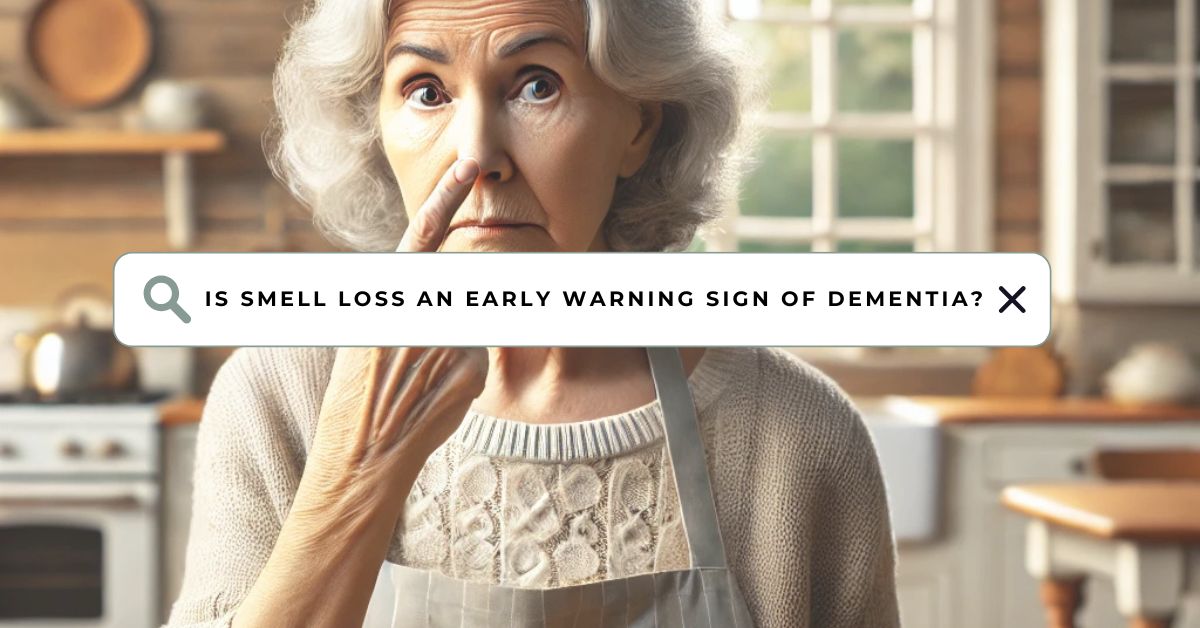
Can Losing Your Sense of Smell Predict Dementia?
Careblazer, did you know that losing your sense of smell might be more than just an inconvenience? Research suggests that a reduced ability to detect odors can be one of the earliest indicators of cognitive decline, including dementia. But why is smell loss connected to brain health, and what should you do if you notice it in your loved one? Let’s break it all down.
How is Smell Linked to Brain Health?
Most people don’t realize how deeply connected our sense of smell is to brain function. The olfactory bulb, the part of the brain responsible for processing smells, is directly linked to areas involved in memory and cognition—specifically the hippocampus. This is crucial because in diseases like Alzheimer’s, these very areas show early signs of damage.
Studies have shown that smell tests can sometimes predict cognitive decline years before noticeable memory issues arise. This means smell loss isn’t just about missing the scent of fresh flowers or morning coffee—it could be an early red flag that something deeper is happening inside the brain.
Why Does Smell Loss Happen in Dementia?
Smell loss in dementia can occur for several reasons, including:
Neurodegeneration – Damage to the brain regions responsible for processing smells.
Plaque Buildup – Accumulation of harmful proteins in areas like the olfactory bulb, interfering with smell identification.
Reduced Signal Processing – Changes in the brain’s pathways can make it harder to interpret smells properly.
However, it’s important to note that just because someone has a diminished sense of smell doesn’t automatically mean they have dementia. Other factors like allergies, sinus infections, and even aging can also contribute to reduced smell perception.
A Real-Life Example: Could This Be Happening to Your Loved One?
Let’s talk about Linda’s dad. He had always enjoyed the smell of fresh coffee in the morning, but recently, he mentioned that his coffee didn’t seem as fragrant. Linda brushed it off at first, but then she noticed he was also becoming more forgetful. Concerned, she took him to the doctor, where he was diagnosed with early-stage Alzheimer’s disease.
This highlights an important point—smell loss, especially when combined with other cognitive symptoms, could indicate an underlying issue that needs medical attention.
What Should You Do If You Notice Smell Loss?
If you suspect your loved one is experiencing a reduced sense of smell, here’s what you can do:
Rule Out Other Causes – Check for sinus issues, allergies, or aging-related changes that might affect smell.
Consider a Smell Test – Ask a doctor about conducting a smell identification test to assess olfactory function.
See a Specialist – A neurologist or neuropsychologist can evaluate whether cognitive decline is playing a role.
Encourage Brain-Healthy Habits – A nutritious diet, regular exercise, quality sleep, and stress reduction all contribute to brain health and may help slow cognitive decline.
The Hidden Dangers of Smell Loss in Dementia
Beyond being an early warning sign, smell loss can pose real dangers in daily life, especially for those already experiencing cognitive impairment.
Someone with reduced smell might not be able to detect a gas leak or something burning on the stove.
They might eat spoiled food because they can’t tell it’s gone bad.
They could be more vulnerable to environmental hazards simply because they can’t smell danger.
This is why early intervention is so important. Identifying smell loss early and making adjustments to ensure safety can make a big difference.
Key Takeaways
Smell loss could be an early warning sign of dementia.
Identifying smell loss early allows for timely medical evaluation.
Taking proactive steps, like ensuring home safety and supporting brain health, is essential.
If you’ve noticed smell loss in your loved one, don’t ignore it—it could be the first step toward identifying and addressing potential cognitive decline.
Looking for More Support?
If this topic resonates with you, you don’t have to navigate it alone. Download our free Dementia Careblazer Survival Guide for practical tips on supporting your loved one.
And for hands-on guidance, our Care Collective program offers live support groups and expert Q&A sessions every week.
Click here to join a community of caregivers who truly understand.
And don’t forget—if you found this article helpful, share it with others who might need it. Together, we can spread awareness and support for dementia caregivers!
Want to watch the in-depth video that inspired this post?
Click the video below to watch. ↓