
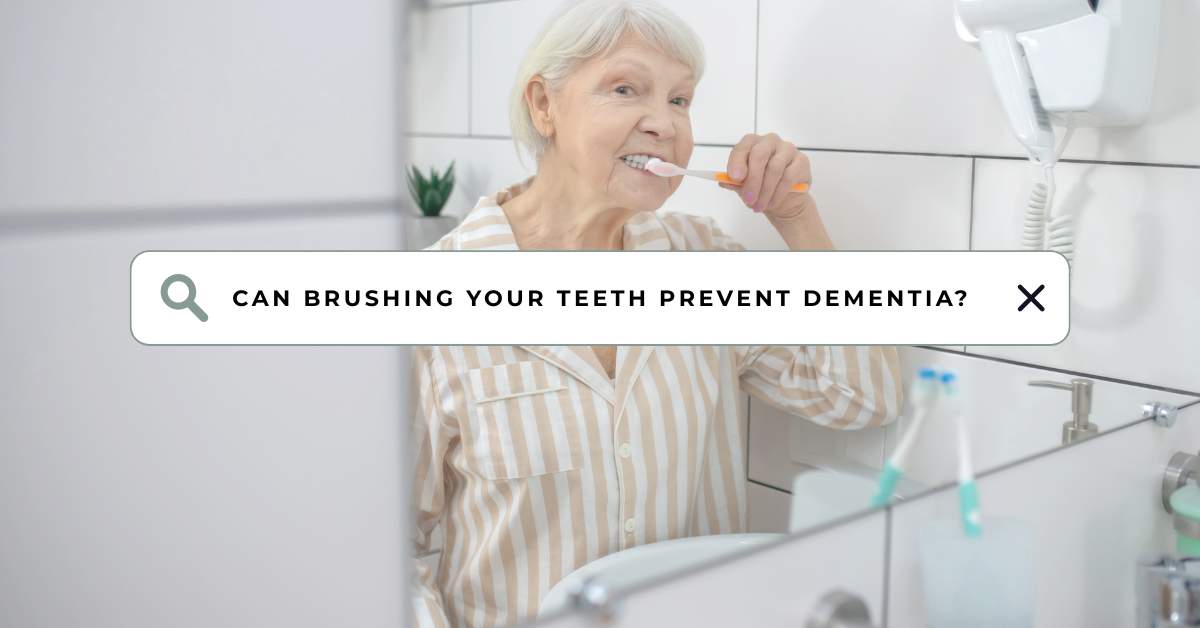
When you think of dementia, your mind probably jumps straight to memory loss, confusion, or genetics. But what if I told you the health of your mouth, your gums, your teeth, even the bacteria on your tongue, could be playing a major role in how your brain ages?
How Is Oral Health Connected to the Brain?
Our mouths are home to billions of bacteria, both good and bad. When these bacteria are in balance, they help us digest food and fight infection. But when bad bacteria take over, often due to gum disease, plaque buildup, or poor dental habits, they create inflammation.
That inflammation doesn’t just stay in your mouth. It can travel through the bloodstream, affecting other parts of your body including the brain.
Recent studies are now pointing to a strong connection between oral bacteria and cognitive decline. In fact, one large study found that:
Every missing tooth increases the risk of dementia by 1.1%
Poor oral health overall raises your dementia risk by 21%
People with gum disease are more likely to develop Alzheimer’s disease
It’s no longer just about cavities. It’s about protecting your brain.
Mouth Bacteria: The Good, the Bad, and the Brain-Altering
Think of your mouth as a bustling city. There’s traffic (food), workers (bacteria), and infrastructure (your gums and teeth). Some bacteria are helpful citizens, they produce something called nitric oxide, which increases blood flow to the brain, boosting learning, focus, and memory.
But the bad bacteria are like criminals. They cause chaos by triggering inflammation and interfering with healthy brain function. If left unchecked, these harmful microbes can even accelerate the progression of dementia.
That’s why scientists now believe that maintaining good oral hygiene isn’t just about fresh breath, it’s a dementia defense strategy.
What This Means for Caregivers
If you’re caring for someone with dementia or worried about your own cognitive health, this research is a wake-up call, but it’s also empowering.
Because here’s the good news: you have control over this.
You don’t need a prescription. You don’t need fancy equipment. You just need to take a few simple, consistent steps.
Here’s what you can start doing today:
Brush your teeth at least twice a day (and encourage your loved one to do the same)
Floss daily – it removes bacteria from between the teeth where a toothbrush can’t reach
Make it fun or social – do it together, listen to music, or make it part of a daily routine
Use electric toothbrushes – they’re especially helpful for people with limited mobility
Choose food that feeds good bacteria – more on that in a moment
Eat for Your Teeth, Feed Your Brain
It’s not just about what you brush with, it’s also about what you eat.
Certain foods can support healthy mouth bacteria, which in turn can support a healthier brain. These are what we call “nitric oxide superstars.” They include:
Leafy greens like spinach, kale, and arugula
Beets and beet juice
Citrus fruits like oranges and lemons
Pomegranate
If those don’t sound too appetizing, try blending them into a smoothie. You’ll hardly taste the greens, and you’ll be feeding your brain with every sip.
Regular Dental Care Still Matters, Even With Dementia
It’s easy to push dental visits down the list when you’re caring for someone with cognitive decline. But regular checkups can catch gum disease, plaque, and inflammation before they cause bigger problems.
If your loved one resists going to the dentist or has trouble with appointments, consider:
Looking for a dementia-friendly dentist (yes, they exist!)
Exploring mobile dentistry services that come to your home
Asking your dentist for simplified cleaning routines or product suggestions
And of course, don’t forget yourself. Caregivers often put their own needs last, but your oral health matters too. Taking care of yourself is part of taking care of them.
Can Mouth Bacteria Predict Alzheimer’s?
Here’s where the research gets even more exciting.
Scientists now believe that by analyzing the types and levels of bacteria in your mouth, they may be able to predict who is at high risk for developing Alzheimer’s, even before any symptoms appear.
That means your dentist, or your toothbrush, might one day help diagnose dementia early.
Early diagnosis is key because:
You can begin lifestyle interventions to slow the disease
You might qualify for medications that only work in the early stages
You may be eligible to join clinical trials
You’ll have more time to plan and get support
And all of that starts with recognizing changes early. Monitoring oral health might just become part of the solution.
Should You Consider Probiotics or Prebiotics?
Some researchers are exploring how probiotics and prebiotics, supplements that support good bacteria, might help balance oral microbiomes and reduce brain inflammation.
It’s promising, but don’t rush to the supplement aisle just yet.
Probiotics can interact with medications, and not all strains are created equal. Always talk to your healthcare provider before starting anything new. But it’s worth asking about, especially if you’re exploring prevention strategies.
Progress, Not Perfection
Let’s be honest—maintaining perfect oral hygiene for someone with dementia isn’t always realistic.
Maybe your loved one resists brushing. Maybe they don’t understand what’s happening. Maybe you’re exhausted and overwhelmed, and tooth brushing just doesn’t make the daily list.
That’s okay.
This blog isn’t about being perfect. It’s about making small changes that make a real difference.
If brushing and flossing twice a day isn’t possible right now, try once. If you can’t make a dental appointment this month, make it next month. If your loved one won’t cooperate, take care of yourself. You matter in this equation too.
What Will You Do Differently Now?
You’ve just learned that:
Gum disease can raise dementia risk
Tooth loss is linked to cognitive decline
Oral bacteria might help predict Alzheimer’s
Your daily habits- yes, even brushing, can help protect brain health
That’s powerful information. So what’s one thing you’ll change today?
Will you floss before bed?
Schedule a cleaning?
Add more leafy greens to your diet?
Start a shared oral care routine with your loved one?
Even reading this puts you ahead of the game. You now know what 95% of people don’t: your mouth and your memory are deeply connected.
Final Thoughts
The idea that brushing your teeth could protect your brain might sound shocking, but it’s backed by science. You don’t need expensive tools or advanced training. Just a toothbrush, a bit of floss, and a small daily commitment.
The earlier we understand the connection between our mouths and our minds, the sooner we can take action to stay sharp, connected, and healthy.
You’ve got this, Careblazer.
Here’s to protecting our smiles and our memories.
External Sources Referenced:
NIA: Large Study Links Gum Disease and Dementia
Journal of the American Geriatrics Society: Tooth Loss and Dementia Risk
You Don’t Have to Do This Alone.
Caring for someone with dementia is hard—but you don’t have to figure it all out alone.
The Dementia Dose is a free, weekly email newsletter that delivers clear advice, new breakthroughs, and proven behavior tips straight to your inbox every Thursday.
It’s made for caregivers. Just like you.
Watch On YouTube
Want to watch the in-depth video that inspired this post?
Click the video below to watch. ↓