
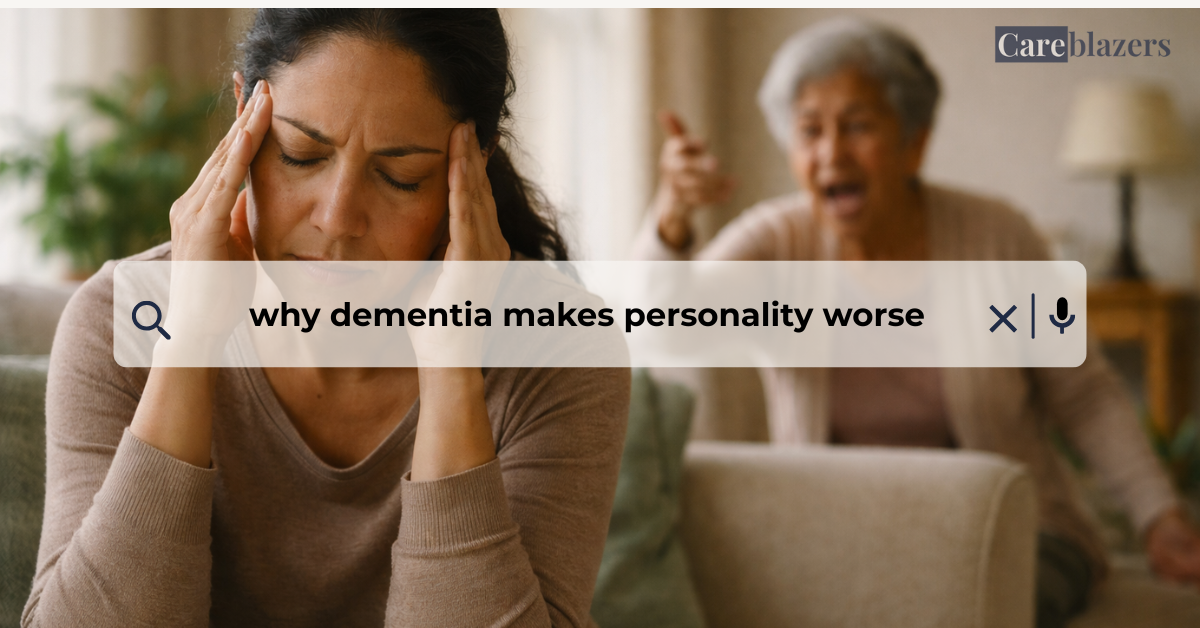
If you are caring for someone who always had big emotions, strong reactions, or a difficult personality, you may feel like dementia has poured gasoline on a fire that was already burning.
The reactions feel faster. The emotions feel bigger. The behavior feels harder to manage and harder to understand.
And many caregivers quietly wonder something they are afraid to say out loud.
Is this actually dementia, or is this just who they have always been?
You are not imagining what you are seeing. And you are not wrong for feeling confused.
In this article, we are going to talk about why certain personality traits and personality disorders can appear more intense as dementia progresses, especially when areas of the brain responsible for emotional control are affected. More importantly, we are going to talk about what this means for you as a caregiver and how to respond in ways that protect your energy, your mental health, and your relationship as much as possible.
Why Dementia Can Make Personality Traits Feel Louder
Many caregivers assume dementia will soften a person over time. Sometimes that happens. But often, the opposite is true.
If someone had intense emotional reactions, difficulty with empathy, or rigid ways of interacting before dementia, those traits often become more noticeable as the brain changes.
Dementia does not erase personality patterns. In many cases, it removes the brain’s ability to regulate them.
This is not about someone choosing to behave badly. It is about the brain losing the systems that once kept certain reactions in check.
A Caregiver-Friendly Overview of Cluster B Personality Traits
To understand what is happening, it helps to talk briefly about a group of personality patterns often referred to as Cluster B personality disorders. This is not a diagnosis guide and not every person fits neatly into a category. But understanding the patterns can be helpful.
Cluster B personality traits tend to involve intense emotions, strong reactions, and difficulty with emotional regulation or empathy.
Borderline Personality Traits
These traits often involve intense fear of abandonment, emotional sensitivity, rapid mood shifts, and difficulty regulating emotions. Reactions to perceived rejection or criticism can be very strong.
Narcissistic Personality Traits
These traits often involve a strong need for control, sensitivity to criticism, difficulty with empathy, and intense reactions when feeling dismissed or challenged.
Histrionic Personality Traits
These traits are marked by dramatic emotional expression, a strong need for attention or reassurance, and emotions that can shift quickly.
Antisocial Personality Traits
These traits can include impulsivity, difficulty respecting boundaries, disregard for rules, and limited remorse.
It is important to understand that personality disorders are not choices. They are longstanding patterns of thinking, feeling, and interacting with the world.
And they do not disappear with age.
What Dementia Does to the Brain Areas That Regulate Emotion
This is where dementia changes everything.
Many of the same brain areas involved in emotional regulation, empathy, impulse control, and self-awareness are affected both in personality disorders and in dementia.
These areas include:
The frontal lobes, which help with reasoning, impulse control, and emotional regulation
The amygdala, which plays a key role in emotional intensity and threat detection
The insula and anterior cingulate cortex, which help with emotional awareness and empathy
When dementia affects these areas, the brain loses its ability to filter, pause, or soften emotional responses.
So what may have once been manageable becomes overwhelming.
The volume gets turned up.
Why These Behaviors Often Feel Worse Than Before
Caregivers often say things like:
“She has always been dramatic, but now it feels extreme.”
“He has always overreacted, but this feels different.”
“They were always difficult, but now I cannot reason with them at all.”
That is because before dementia, many people had some ability to compensate. They may have learned coping strategies, used insight, or had enough frontal lobe control to pause before reacting.
Dementia strips away those skills.
What remains is a more raw, unfiltered emotional response.
- Someone who was once stubborn may become rigid.
- Someone who was anxious may become panicked.
- Someone who was suspicious may become paranoid.
- Someone who was emotionally expressive may become explosive.
This is not a character flaw. It is brain biology.
Is It Dementia or Is It Just Their Personality?
The honest answer is often both.
A person can have longstanding personality traits and also experience dementia-related brain changes that intensify those traits.
That does not mean you are required to tolerate abuse or harm. But it does mean that arguing facts, reasoning, or trying to correct behavior often backfires.
The brain that once allowed reflection and self-control may no longer be accessible.
How to Respond When Emotions Are Bigger Than Logic
When dementia and personality traits collide, traditional communication strategies often fail. These approaches tend to be more effective.
Respond to Feelings, Not Facts
Instead of correcting what they are saying, respond to how they feel.
“You seem really scared right now.”
“This feels unfair to you.”
“I can see how upsetting this is.”
You do not need to agree with the content of what they are saying to validate the emotion behind it.
Avoid Logic Battles
Reasoning and explanations rely heavily on the frontal lobes, which are often compromised in dementia.
Trying to prove a point usually escalates emotions rather than calming them.
Step Away When Needed
If emotions are escalating and safety allows, stepping away for a few minutes can help reset the intensity. A short break can prevent things from spiraling.
Watch Your Own Thoughts About Their Behavior
This may be the most important piece.
If you are thinking:
“They are doing this on purpose.”
“They have always been manipulative.”
“They are trying to make my life harder.”
Those thoughts will increase your stress, anger, and exhaustion.
If instead you lean into thoughts like:
“This is brain-based.”
“Their emotional regulation system is impaired.”
“They do not have full control right now.”
You may still be dealing with the same behavior, but you will feel more grounded and less overwhelmed while doing so.
Why This Perspective Protects You as a Caregiver
Understanding what is happening in the brain does not excuse harmful behavior. But it can reduce the emotional toll caregiving takes on you.
When caregivers internalize blame or intent, burnout accelerates.
When caregivers understand brain-based changes, they often feel more clarity, emotional distance, and self-compassion.
This does not make caregiving easy. But it can make it survivable.
You Are Not Alone in This Experience
If you are caring for someone whose personality traits feel amplified by dementia, you are not imagining it. You are not weak for struggling. And you are not alone.
Many caregivers are navigating this exact dynamic quietly, feeling confused, frustrated, and emotionally exhausted.
Support, education, and community matter more than ever in these situations.
A Gentle Invitation
If you want ongoing education, support, and caregiver-centered guidance that helps you understand what is happening in the brain and how to respond without losing yourself in the process, I invite you to join the Dementia Dose newsletter.
Each week, you will receive clear, compassionate insights designed to help you feel more grounded, more informed, and less alone in this journey.
You can subscribe to the Dementia Dose and be part of a community that truly understands what you are carrying.
Watch On YouTube
Want to watch the in-depth video that inspired this post?
Click the video below to watch. ↓