
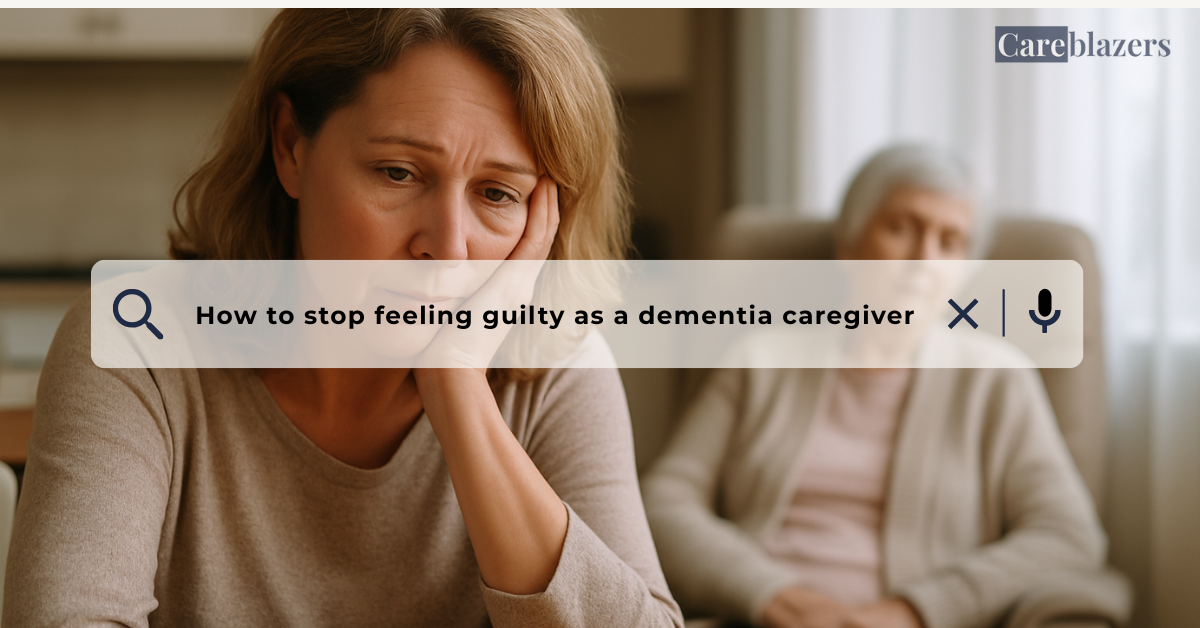
Dementia Caregiver Guilt: Why You Feel It and How to Let It Go
Have you ever felt guilty as a dementia caregiver? Maybe you felt guilty for taking a break, going to your own doctor’s appointment, or even for wishing things were easier. If so, you are not alone. Caregivers around the world carry heavy guilt, often over things that, when we take a step back, are not actually wrong at all.
Recently, I asked caregivers on Instagram to share the most “ridiculous” thing they ever felt guilty about. Over one hundred people responded, and their honesty revealed something important: caregiver guilt is universal, but most of the time it is undeserved.
In this post, we will look at common caregiver guilt triggers, why they happen, and how you can start to free yourself from unnecessary shame. You’ll also learn one simple 10-second test you can use whenever guilt shows up.
Why Caregiver Guilt Is So Common
Before we dive into the real-life examples, it is important to understand why caregiver guilt is so strong.
Guilt is a feeling. Feelings are not caused by the situation itself, but by the thoughts we have about the situation. For example, if you ask your sibling to help care for your loved one, you might think, “I’m burdening them.” That thought triggers guilt.
But if another caregiver asked for the exact same help, you would likely tell them, “You’re doing the right thing. It’s impossible to do this alone.”
This shows how much of caregiver guilt is driven by our inner critic rather than reality.
Real-Life Examples of Caregiver Guilt
Here are some of the “ridiculous” but very real examples caregivers shared:
Stopping a parent from driving.
One caregiver felt guilty for taking away her father’s keys. Yet every person with dementia eventually has to stop driving, because it becomes unsafe for them and for others. Protecting lives is not something to feel guilty about, but the guilt still showed up.
Asking family for help.
Another caregiver said she felt guilty for “burdening” her family members when she asked for help, even though she was exhausted. The reality: it is impossible for one person to provide care 24/7 for years without support. Yet guilt whispered that she should be able to do it all.
Enjoying a concert.
One caregiver went to a concert alone, something she loved, while her husband with dementia stayed home. She felt guilty because he loved music too. But depriving yourself of joy will not take away dementia, nor will it make your loved one’s illness any better.
Going to her own doctor’s appointment.
One caregiver admitted feeling guilty for prioritizing her health by attending her doctor’s visit. Yet caregivers are at higher risk of serious health issues — even death — when they neglect themselves. Taking care of your health is essential if you want to continue caregiving.
Taking too long in the bathroom.
Yes, one caregiver said she felt guilty for staying in the bathroom a few extra minutes just to have some space. This small act of self-preservation felt selfish in the moment, but in reality it was necessary.
Craving alone time.
A caregiver shared that she dreamed of staying in a hotel room by herself with nothing to do. Instead of recognizing this as a healthy need for rest, she felt guilty for even wanting it.
Thinking, “I wish this was over.”
Several caregivers bravely admitted to wishing the journey would end. These thoughts come from exhaustion, not from a lack of love. It is normal to feel this way when the caregiving load feels unbearable.
Reading these examples, it’s easy to see that none of these caregivers deserved guilt. And yet, guilt is exactly what most of us feel in the moment.
The Psychology of Caregiver Guilt
Our feelings of guilt are real and valid, but they are not always accurate. Often, guilt shows up when our brain tells us a story like:
“I should be able to do this alone.”
“I shouldn’t enjoy myself if my loved one is suffering.”
“I should have prevented that fall, mistake, or hospital trip.”
These “should” thoughts fuel guilt. But when we step back, we realize how unrealistic and unfair they are.
If your friend shared these exact same situations, would you tell them they should feel guilty? No. You would reassure them with compassion. That same compassion is what you deserve to extend to yourself.
The 10-Second Test to Reduce Caregiver Guilt
Here’s a quick tool you can use the next time guilt creeps in:
Ask yourself: “If someone I loved told me this same situation, what would I say to them?”
Then, say those same words to yourself.
Most of the time, you would tell a friend or family member:
“You needed a break.”
“You did the right thing.”
“It’s okay to take care of yourself.”
If you would say that to someone you care about, you can say it to yourself too.
Why Letting Go of Guilt Helps Everyone
Caregiver guilt doesn’t just harm you. It harms your loved one, too. When you deprive yourself of rest, joy, or health care because of guilt, you become more stressed, burned out, and at risk for illness. This reduces the quality of care you can provide.
Taking breaks, asking for help, and enjoying life are not selfish. They are necessary for survival in a caregiving role that often lasts for years.
Frequently Asked Questions About Caregiver Guilt
1. Is it normal to feel guilty as a caregiver?
Yes. Almost every dementia caregiver experiences guilt at some point. The key is recognizing that guilt is often based on harsh self-criticism, not reality.
2. How can I stop feeling guilty when I take time for myself?
Remind yourself that caring for your health and joy is part of being a better caregiver. Use the 10-second test to reframe your thinking.
3. What if I feel guilty for asking family members for help?
It is not possible for one person to handle dementia caregiving alone. Accepting help is a strength, not a weakness.
4. Is it wrong to sometimes wish the journey was over?
No. These thoughts often come from exhaustion. Acknowledging them honestly can help you seek support rather than shame.
5. How do I know if guilt is unhealthy?
If guilt constantly weighs you down and prevents you from caring for yourself, it may be time to reach out for counseling, support groups, or coaching.
Final Thoughts
Caregiver guilt may always try to sneak into your thoughts, but you do not have to let it control you. The next time you notice guilt, pause, and ask yourself what you would say to a friend in the same situation. Then, give yourself that same compassion.
You deserve rest, joy, health, and peace — even while caregiving. Your loved one’s dementia is not your fault, and you are doing your best.
If you want weekly support, tips, and encouragement to help you through your caregiving journey, join my free Dementia Dose newsletter. Every Thursday I send out tools, strategies, and uplifting reminders to help you feel less alone.
Watch On YouTube
Want to watch the in-depth video that inspired this post?
Click the video below to watch. ↓