
Love Says No: Why Safety Must Come Before Constant Happiness in Dementia Care
Caring for someone with dementia means facing some of the hardest choices you will ever make. One of the most difficult is deciding when to say “no” to something your loved one wants to do. Maybe they want to keep driving, live alone, or cook meals by themselves. You know those activities are no longer safe, but you also know how upset they’ll be if you stop them.
This creates a painful dilemma: should you keep them happy in the moment, or keep them safe for the long run?
As hard as it is to hear, trying to prioritize their happiness at all costs can lead to serious harm. In some cases, it can even land them in the hospital. In this post, we’ll explore why safety must be the standard, how to handle the guilt that comes with saying “no,” and practical strategies for setting loving limits without destroying your relationship.
The Danger of a “Happiness First” Approach
It’s natural to want to keep your loved one happy. After all, you love them and don’t want to cause distress. But in dementia care, happiness and safety don’t always go hand in hand.
A “happiness first” approach often becomes a “harm first” situation. Allowing unsafe behaviors to continue—like driving, managing money, or cooking unsupervised—can have devastating consequences.
One caregiver shared how her mother, who insisted on driving, hit a neighbor’s car. Fortunately, no one was hurt, but the situation could have been much worse.
Key takeaway: Your role as a caregiver is not to guarantee constant smiles. Your role is to keep your loved one, and the people around them, safe.
Love Says No When Yes Is Dangerous
Here’s a motto to keep in mind: Love says no when yes is dangerous.
Saying no does not mean you are uncaring. It means you love them enough to protect them, even if it makes them upset. Their frustration, grief, or anger is not a reflection of your failure—it is a natural reaction to losing independence.
In many cases, if your loved one fully understood their situation, they would agree with your decision. But because their brain has changed, they can’t always see the risks clearly. That’s why they need you.
Why Caregivers Feel So Guilty
When you step in and set a limit, you may hear painful words like:
“You’re treating me like a child.”
“You’re a horrible spouse.”
“I hate you.”
Hearing those things hurts deeply, especially when you’ve sacrificed so much to care for them. But those words are often driven by brain changes, fear, or grief—not by how they truly feel about you.
Remember: Their anger doesn’t mean you’re a bad caregiver. It means they are struggling with the loss of independence, and you happen to be the one enforcing the reality they don’t want to face.
Understanding Their Perspective
Take a moment to imagine how it would feel if suddenly you could no longer:
Drive to the store
Pay your own bills
Cook a meal on your own
Live without supervision
Wouldn’t you feel frustrated, embarrassed, or even angry? Those reactions are normal, and your loved one’s resistance is often part of their grieving process.
This doesn’t mean you allow unsafe behaviors. It means you set boundaries with compassion, understanding that their pushback is human.
Balancing Happiness and Safety
Of course, the goal is not to remove all happiness. Your role is to protect safety and create as much joy as possible in safe, meaningful ways.
Practical strategies include:
Redirecting unsafe activities into safer alternatives (e.g., cooking together instead of alone).
Offering choices whenever possible to maintain dignity (e.g., “Would you like chicken or fish for dinner?”).
Encouraging enjoyable, low-risk activities (music, crafts, short walks, family visits).
Happiness still matters—but never at the cost of safety.
How to Say No with Compassion
One of the hardest skills for caregivers is learning how to say no without sparking a fight. Here are a few approaches:
1. Use Gentle Redirection
Instead of flatly saying, “You can’t drive anymore,” try:
“Let’s go together today, I’d love the company.”
“The car needs service, but let’s take a walk while we wait.”
2. Acknowledge Feelings
Say:
“I know this is frustrating. I would feel the same way.”
“It’s hard to give up things you’ve done your whole life.”
3. Stay Calm and Avoid Arguing
Your calm tone matters more than the words themselves. Arguments usually make things worse.
4. Use Tools Like Scripts
If you struggle to find the right words, pre-written “loving no” scripts can help you practice kind, compassionate responses.
Safety Scenarios Where “No” Is Necessary
Let’s look at common situations where caregivers often face this struggle:
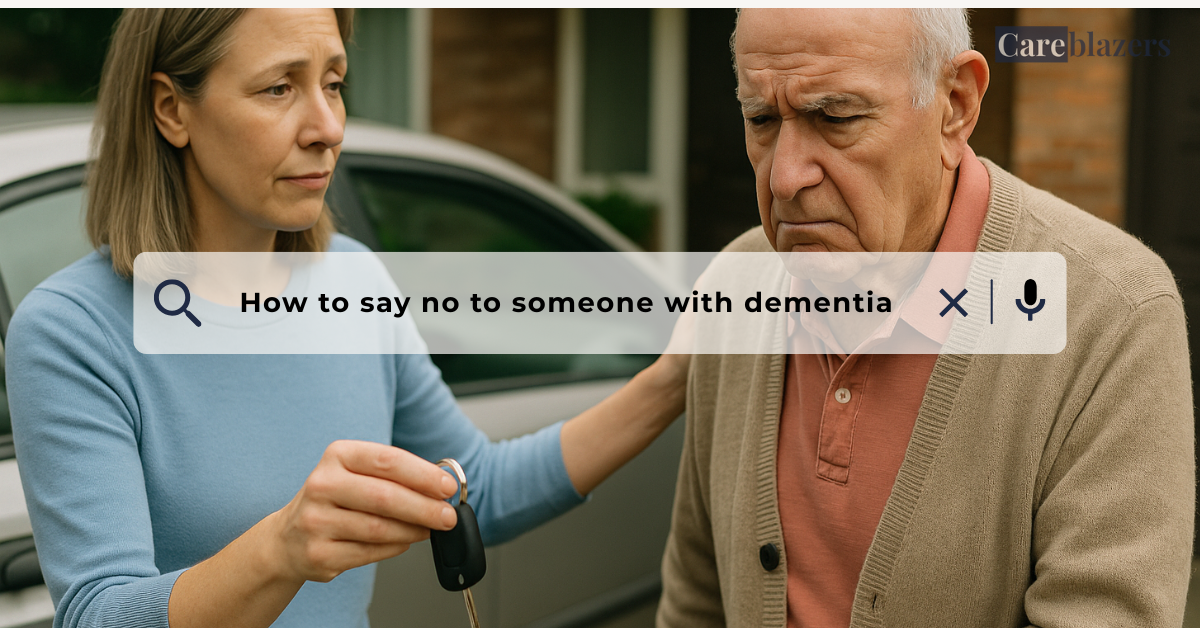
Driving: Allowing someone with dementia to drive puts everyone on the road at risk. Taking away the keys may be heartbreaking, but it can prevent tragedy.
Managing Finances: Vulnerability to scams and mistakes is high. Stepping in protects them from losing savings or falling into debt.
Cooking Alone: Leaving the stove on or mishandling appliances can lead to fire hazards. Cooking together or simplifying meals is safer.
Living Alone: At a certain point, living alone becomes too risky. Wandering, falls, and missed medications can all lead to hospitalizations.
In all of these cases, “yes” might bring temporary happiness, but “no” protects long-term well-being.
Reframing Caregiver Guilt
Instead of asking, “How can I keep them happy all the time?” ask, “How can I keep them safe and cared for, while creating joy where possible?”
This shift removes the unrealistic pressure of constant happiness and replaces it with a balanced, loving perspective.
Remember: Your standard is safety, not smiles.
Frequently Asked Questions About Saying No in Dementia Care
1. How do I stop feeling guilty when I upset my loved one?
Remind yourself that their reaction is normal grief. Your role is safety, not agreement. Guilt is a sign you care, but it does not mean you are wrong.
2. How do I know when it’s time to step in?
If an activity poses serious risk to them or others, it’s time to say no. Examples include unsafe driving, cooking, or financial management.
3. What if my loved one calls me controlling or mean?
Stay calm and avoid arguing. Their words reflect frustration, not truth. Focus on compassion and keep your boundary.
4. How can I make “no” feel less harsh?
Use redirection, acknowledge feelings, and practice kind phrases. Tools like loving scripts can help you respond calmly in difficult moments.
5. Can I still prioritize their happiness?
Absolutely. Encourage safe joys, hobbies, and moments of connection. Just don’t confuse happiness with safety in situations that could cause harm.
Final Thoughts
Being a dementia caregiver means making tough decisions your loved one may not understand. It means sometimes being the “bad guy” in the moment to protect them from long-term harm. That doesn’t make you unkind—it makes you loving.
You don’t have to keep them happy all the time. You do need to keep them safe. And along the way, you can still find opportunities for joy, laughter, and love in safe, meaningful ways.
If you want more practical caregiving strategies and weekly support, I invite you to join my free Dementia Dose newsletter. Every Thursday I send out tips, tools, and encouragement to help you feel less overwhelmed and more confident in your caregiving.
Watch On YouTube
Want to watch the in-depth video that inspired this post?
Click the video below to watch. ↓