
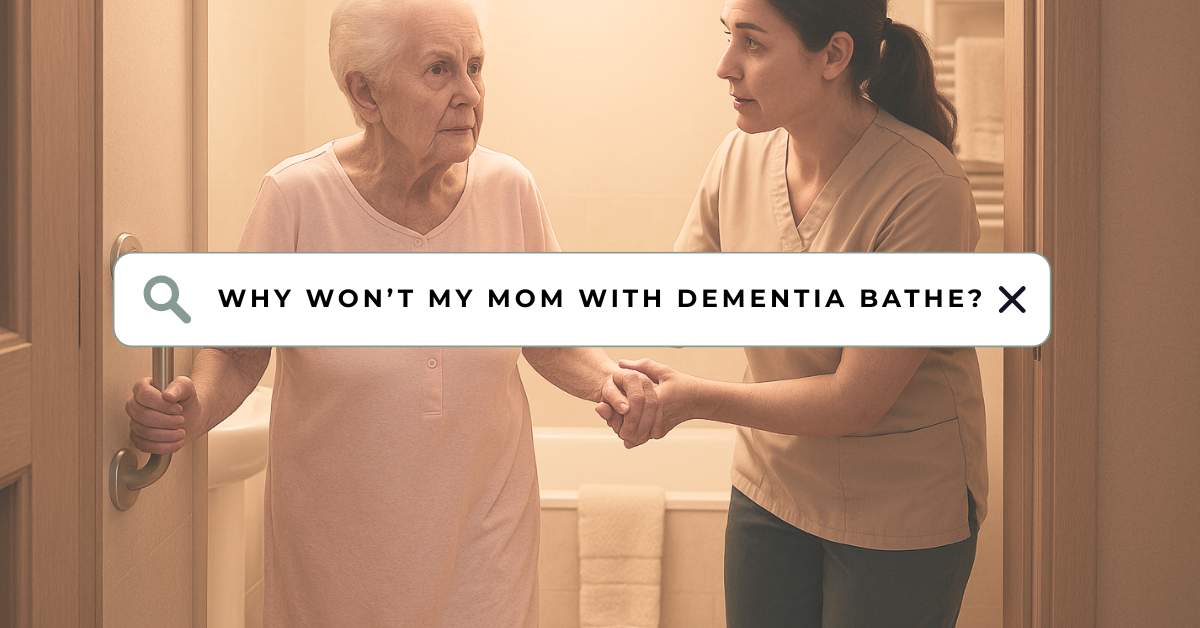
Bathing might seem like a basic part of everyday life, but for many people with dementia, it becomes a major source of stress—for both them and their caregivers. If your loved one resists or flat-out refuses to take a shower, you are far from alone.
In fact, 1 in 3 people with dementia resist bathing, and the reasons why might surprise you.
This post will walk you through 11 common (and often overlooked) reasons your loved one may be avoiding the bath or shower, plus simple strategies you can try to help make the process less stressful for everyone involved.
Reason #1: They Think They’ve Already Bathed
Memory loss can play tricks on time. Your loved one may believe they already showered today, even if it’s been weeks. This isn’t denial—it’s their reality.
Try this instead:
Rather than argue, reframe the situation with language that feels natural to them. Say, “Let’s freshen up before dinner” or use a familiar phrase they once used—like one caregiver did by telling his wife, “It’s time to get pretty.” That small shift sparked a breakthrough after months of resistance.
Reason #2: They’re Afraid of Falling
Slippery tiles, stepping over the tub edge, or standing on wet surfaces can feel like walking on ice. Dementia heightens these fears.
How to help:
Install grab bars and non-slip mats
Use a shower chair or transfer bench
Offer a sponge bath on tough days
Try no-rinse wipes like these cleaning cloths on Amazon for quick cleanups from the comfort of a recliner
Reason #3: The Bathroom Is Too Cold
Many older adults feel cold even when others are comfortable. Now imagine asking that person to undress and get wet in a chilly room. That’s a hard sell.
Solutions:
Use a space heater to warm the room
Try a towel warmer to make the experience more pleasant
Allow them to wear a towel or light robe while you help wash around them
Reason #4: Scary Sounds in the Bathroom
The sound of rushing water, an exhaust fan, or echoes in a small bathroom can cause sensory overload for someone with dementia.
What you can do:
Play soft music during bath time
Let them turn on the water themselves to reduce surprise
Minimize background noise where possible
Reason #5: They Don’t Understand Why They Need to Bathe
If your loved one doesn’t feel dirty or can’t smell their own odor, they may not see the point of bathing—and explaining the health reasons likely won’t work.
Instead, focus on comfort:
Say things like, “Let’s freshen up,” or offer to help them “feel better before company comes.” Keep it simple and gentle.
Reason #6: Embarrassment or Modesty
Bathing often involves getting naked and being touched, which can feel deeply uncomfortable, even humiliating—especially if they don’t fully understand what’s happening.
Make it easier:
Let them wear boxers or a nightgown while you wash around it
Offer them a loofah or washcloth so they can help with the process
Give them as much privacy and control as possible
Reason #7: The Water Feels Strange—or Painful
For some with dementia, water may feel heavy, painful, or overstimulating, especially on sensitive skin.
Try these alternatives:
Use a handheld shower head for more control
Offer a sponge bath instead of full immersion
Experiment with different water temperatures and pressure levels
Reason #8: Bathing Causes Pain
Physical conditions like arthritis, stiff joints, or neuropathy can make the act of bathing miserable—especially stepping into a tub or standing up in the shower.
Tips for easing discomfort:
Try a warm soak in the tub to loosen joints
Schedule bathing around pain medication (work with your doctor to avoid timing that increases fall risk)
Reason #9: It’s About Control
Sometimes, resistance isn’t about the bath—it’s about independence. Saying no can be a way for someone with dementia to express that they still have control over their life.
Give them a choice:
“Would you like to shower before breakfast or after?”
“Do you want to use the blue towel or the green one?”
Even small decisions can help them feel more in control.
Reason #10: They Don’t Recognize Their Reflection
This might be the most surprising one—they see a stranger in the mirror and feel afraid.
What to do:
Cover mirrors with a towel or remove them from the bathroom if this becomes a regular issue
Keep lighting soft and avoid shadows that may startle or confuse
Bonus Reason #11: They’re Just Too Tired
Bathing requires a lot of energy: undressing, stepping into the tub, staying balanced, drying off, dressing again. For someone with dementia, especially in later stages, this can be exhausting.
Work with their energy level:
Bathe during their most alert time of day
Break the process into smaller steps
Allow for rest breaks if needed
There’s No One-Size-Fits-All in Dementia Care
What works for one person may not work for another. As caregivers, it’s important to look beyond the behavior and ask: Why is this happening? The more you understand the why, the better you can adapt your how.
Whether it’s fear, confusion, embarrassment, or fatigue, there is a compassionate response—and it often starts by seeing the world through their eyes.
Final Thoughts: You’re Doing It Right
If your loved one refuses to bathe, you’re not failing. You’re facing one of the most emotionally and logistically challenging parts of dementia care.
You are not alone—and you don’t have to figure this out by yourself.
You Don’t Have to Do This Alone.
Caring for someone with dementia is hard—but you don’t have to figure it all out alone.
The Dementia Dose is a free, weekly email newsletter that delivers clear advice, new breakthroughs, and proven behavior tips straight to your inbox every Thursday.
It’s made for caregivers. Just like you.
Want to watch the in-depth video that inspired this post?
Click the video below to watch. ↓