
Introduction
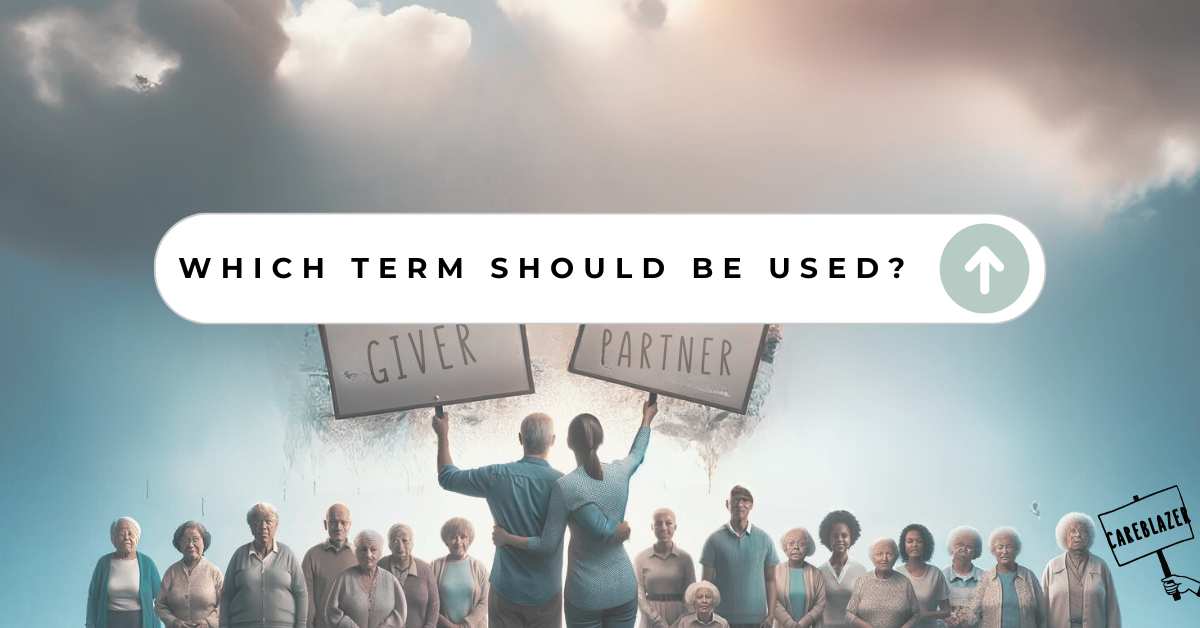
There’s a shift happening In the world of dementia care. The traditional term “caregiver” is being challenged by the newer term “Care Partner.” This article shares the implications of this shift. Given all the challenges we face in dementia care, I was surprised to see attention being given to a subject that doesn’t seem to have any direct positive impact on the person with dementia or their caregivers.
The Debate: Caregiver vs. Care Partner
Recently, while on LinkedIn I saw a post from a dementia care organization that showed the word caregiver (among other words) being considered the “old model” of care and advocating for the use of “Care Partner.”
I searched online for more information on the recommended use of Care Partner versus Caregiver. I came across An article titled, Dementia Caregiver Intervention Research Now and into the Future:Review and Recommendations. In the article, there is a comment that says, ‘More specifically, “care partner” is emerging as the preferred referent among PLwD (people living with dementia) and family members of individuals at an early disease stage and/or for individuals living alone in which some support may be necessary but for which hands-on care is not yet necessary. Thus, “partner” may more accurately reflect the role of a family member or paid individual than the term “caregiver.”‘
This statement from researchers also seems to confirm that the term Care Partner may not be appropriate throughout the entire course of the disease. Given this information, is it expected for people who care to change the terminology they use based on the stage of the dementia the person is in and their ability to participate in their care?
Unfortunately, the number of people with dementia they consulted in their study was not reported so it’s difficult to know how much the term Care Partner is truly a reflective preference among people living with dementia.
Notably, they did not seem to reference any actual family caregivers in this study. Given that over 11 million family members provide unpaid care for a person living with dementia, it seems vital that any changes to the terminology used to describe what they do would include their input.
the SHIFT IN TERMINOLOGY
Promotes Equality and Collaboration
The shift toward the term “Care Partner” aims to foster a more equal and collaborative relationship between the person giving the care and the person receiving the care, according to online sources. However, this shift raises questions about its practicality, especially as dementia progresses so does the ability of the person with dementia to actively “partner” in their care.
the SHIFT IN TERMINOLOGY
The shift toward the term “Care Partner” aims to foster a more equal and collaborative relationship between the person giving the care and the person receiving the care, according to online sources. However, this shift raises questions about its practicality, especially as dementia progresses so does the ability of the person with dementia to actively “partner” in their care.
Here’s What Family Caregivers Had To Say About This Topic:
“Caregivers are what we are. Care partner assumes the receivings of our care are partnering with us but all too often that is not at all the case.”
“I felt like a care partner at first. Now that my husband with dementia is in the late stages I don’t see a partnership anymore.”
“I think the term caregiver is completely appropriate. Partner sounds like it’s two people on equal ground and it’s not. Care receivers experience their worlds nin a completely different way for the general population and so go caregivers.”
“The relationship is not a partnership – partners are usually on equal footing. This is not in any way disrespectful to the one being cared for.”
“I am not a care partner since my dad has no part in his care.”
CHALLENGES WITH THE TERM CARE PROVIDER
Counteracts the Perception That People with Dementia Can’t Participate in Their Care
I’ve been a caregiver for my mom and I’m currently a caregiver for my dad. I’ve had the benefit of getting to know many family members and professionals giving care to people with dementia. They are wonderful caregivers and part of their care always includes taking into consideration the person with dementia’s wishes and collaborating with them when possible.
Caregiving automatically involves partnering- it doesn’t exclude it. Creating a new term does not mean that caregivers don’t look for ways for their loved ones to participate in care. This isn’t a situation where we need a new word, it’s a situation where we need more training and awareness.
It Diminishes The Heroic Efforts Caregivers Do On A Daily Basis
Many caregivers take pride in their role. The shift away from “caregiver” may feel institutional and diminish the responsibility that caregivers carry every day.
What Caregivers Have To Say…
“The term caregiver gave me something to be proud of. My mom had zero ability to care for herself towards the end. Why would anyone want to take that form people doing one of the hardest, yet rewarding, jobs ever?”
“I love caregiver. That’s what we do – give care.”
“I’m giving care and I’m honored to be able to give care.”
“The term care partner takes away from the one person who is handling the majority of all the decisions.”
“Caregivers is not a wrong word. It’s the truth. It’s real. That’s what we are and we should be recognized.”
“Caregiver is what I am. I am not partnering with anyone to take care of my husband. I’m 100% giving the care. Saying carepartner belittles us.”
“Caregiver is a badge of honor!”
“Sometimes my mom is a partner but most of the time I am giving her care and she knows this and appreciates it. She doesn’t need to partner with me. She likes being cared for.”
The New Term Of Care Partner Seems To Be Unclear
The new term “Care Partner” can be confusing. In a field where there is already so much confusion, creating a new term that doesn’t seem to have any impact on care seems useless.
For example, I asked one of my female friends if she had heard of the term “Care Partner.” Her mom died of early-onset Alzheimer’s years ago. She said she hadn’t heard of that term but she thought it would refer to someone caring for a spouse with dementia because it used the term “partner.”
And she’s not the only one who was confused by this term. Here are some responses I received after posting about this on my social media accounts…
“Care partner would be if you shared the responsibilties with another person other than the one being cared for.”
“Caregiver is what we are…we are giving care to our loved ones. It should never be thought of as disrespectful. What does care partner even mean?”
Another response said, “I think a caregiver gives care. A care partner implies a relative.”
“Caregiver is the only adequate description as most are not partners, but family members.”
“I’m fine with caregiver. I wish I had an actual partner to help me caregive my mom so I could get a break. If I’m a care partner that implies there is another person helping with the load.”
FEEDBACK FROM Caregivers
In a survey conducted on my Instagram account, 98% (1,379 respondents) are comfortable with the term “caregiver,” while only 2% (35 respondents) believe it should no longer be used.
When asked about “Care Partner,” 65% (813 respondents) preferred “caregiver,” 6% (77 respondents) liked “Care Partner” better, and 29% (354 respondents) felt the discussion was unimportant.
Implications For Care
The focus on terminology risks overshadowing the need for tangible support and resources for caregivers. Instead of focusing on labels, efforts should be directed towards providing education, training, and support services that can make a real difference in the lives of both caregivers and those with dementia.
The True Meaning Of Caring For Someone With Dementia
The idea behind using “care partner” is to make things feel more equal and respectful. But what’s really important is not changing the name, but giving better support and thanks to those who care for others tirelessly. This would make a big difference in the lives of people with dementia and their carers.
Over time, some words have needed to change because they were offensive and derogatory. But “caregiver” is not one of those words.
We don’t need a new word for caregiver; we need better care and support.
It’s still unclear how changing the term from “caregiver” to “Care Partner” adds any positive value to the person with dementia. And while some people with dementia might like the term “Care Partner,” others with dementia might not.
As with so much in the dementia world, a one-size-fits-all approach rarely works. Trying to fit everyone inside the same box and labels is not possible and doesn’t take into the individual with dementia or the individual providing the care.
Personally, I think it’s okay to use whatever term feels right for the person giving care and the person getting care, whether it’s “Care Partner,” “caregiver,” or something else. My greatest concern is that the word “caregiver” shouldn’t be slandered or put down. Many people who provide hands-on care are proud of this word. As one caregiver said, to be a caregiver is a “badge of honor.”
As care homes and residential care “communities” start to teach their staff about this new way of talking, I hope they also find time to include real care strategies that make life better for people with dementia. Let’s focus on real support instead of just changing words, making sure that the true spirit of caregiving stays at the heart of dementia care.
WHAT DO YOU THINK?
I wrote this article for the millions of family caregivers who give so selflessly to their loved ones with dementia (yes, I’m aware that “loved one” is another term we aren’t supposed to use now).
I’m writing so they are represented when major change is recommended. I’m writing so they will have a voice.
Without the family caregivers of the world, there would be no way to meet the care needs of the people with dementia. Let’s not forget including their voice when when recommending changing directions in the field of dementia.
I’ll leave you one final comment from a Dementia Care Practitioner and loving caregiver to her mom with dementia, Ty Lewis of @iamgertrudejordan. Her comment echoes a theme I heard over and over again from the caregivers when hearing the news about the shift from caregiver to Care Partner:
“I’m tired of professionals who aren’t doing the work but are changing the language.” – Ty Lewis
How do you feel about the shift from “caregiver” to “care partner”?
Share your thoughts and experiences in the comments below.
All thoughts and comments are welcome.
Transform Your Caregiving Journey: Join Our Care Collective Today 💖
Are you seeking deeper, more personalized support in your caregiving journey? Discover our Care Collective program, designed exclusively for caregivers like you. By joining, you’ll gain access to weekly support groups, engage in expert-led Q&A sessions, and connect with a vibrant community of caregivers who truly understand the challenges you face. Don’t navigate this path alone—CLICK HERE to learn more and become part of a supportive network dedicated to empowering caregivers with knowledge, compassion, and resources. Join us today and transform your caregiving journey!